Engineering Reliable MBR Performance from Design Through Operation
FibrePlate™ Fusion membrane bioreactor systems are designed to integrate into retrofit, expansion, and greenfield projects without introducing new hydraulic or operational risk. Configuration flexibility is achieved while maintaining structural consistency across the asset lifecycle.
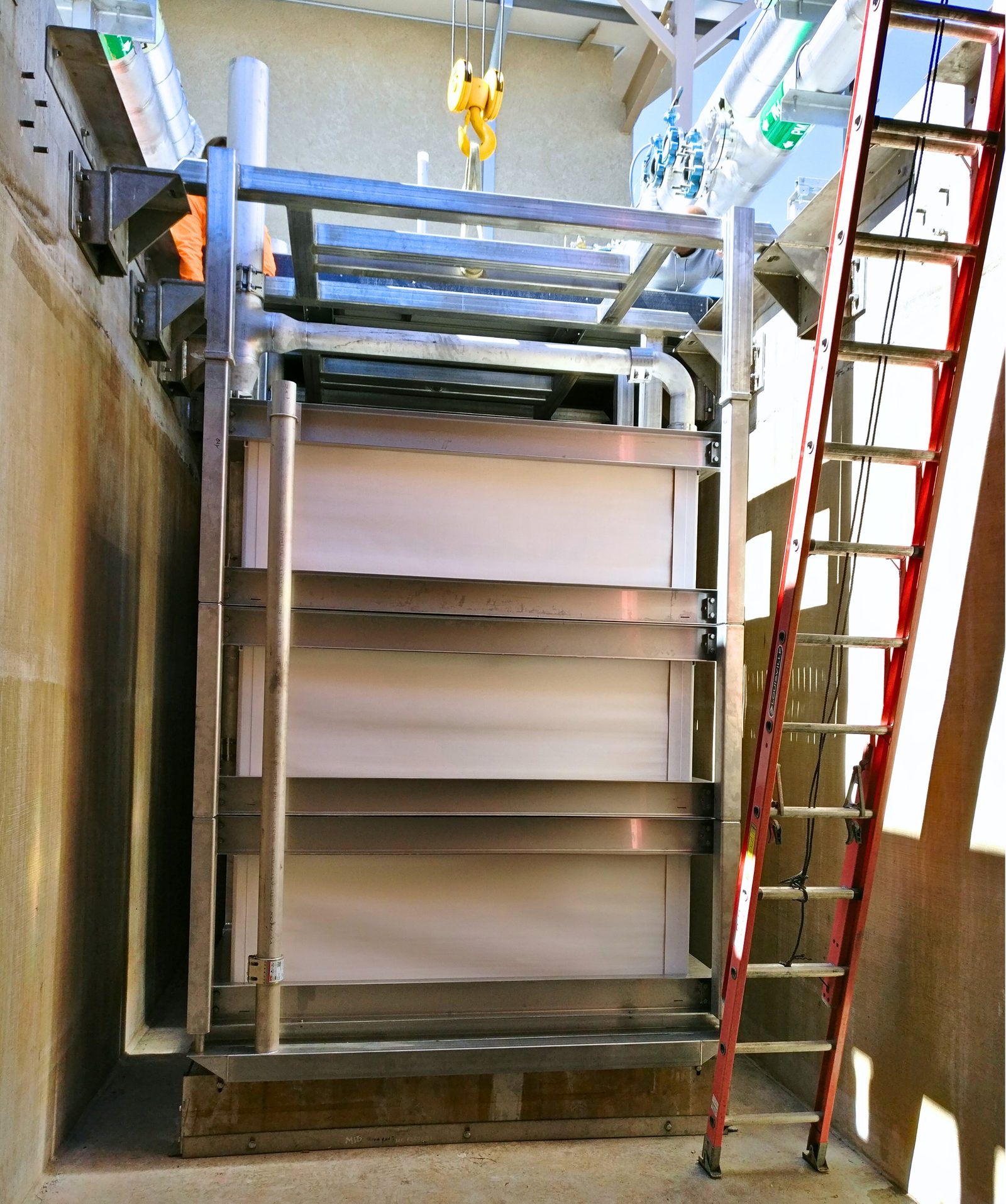
At the module level, horizontal membrane sheets connect to vertical permeate headers that control mechanical load distribution and prevent localized stress concentration over long-term operation. Modules assemble into infrastructure-grade stainless steel cassettes that are self-supporting, corrosion-resistant, and engineered for in-service installation and removal without introducing operational or structural risk during plant operation.
At the system level, FibrePlate™ Fusion supports rectangular basins, long membrane trains, and circular clarifier retrofits, enabling infrastructure reuse while preventing the hydraulic compromises that typically follow retrofit-driven designs.
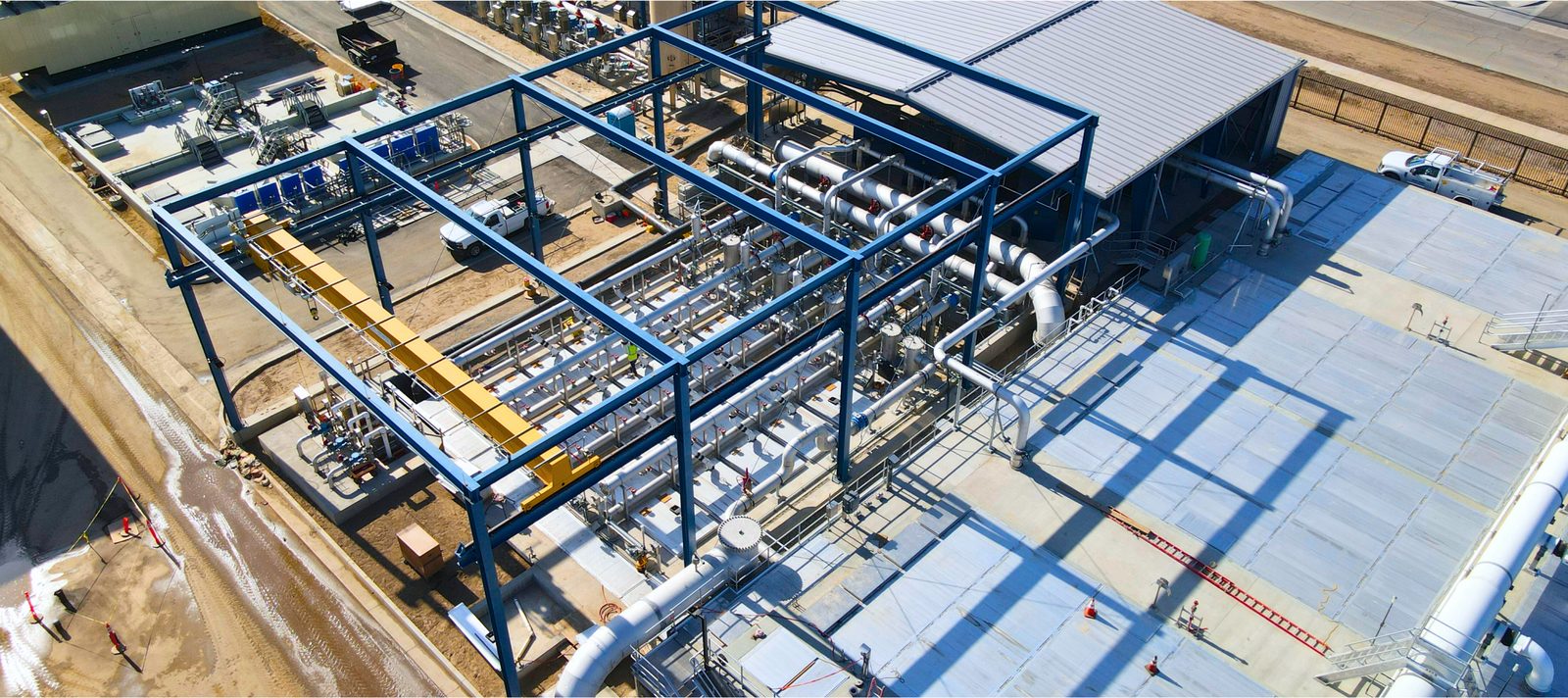
MBR adoption alone does not guarantee long-term performance. Lifecycle outcomes are dictated by membrane architecture, hydraulic openness, and fouling control strategy. Where these elements are structurally constrained, performance degradation is inevitable.
Why Conventional MBR Systems Struggle Over Time
The dominant long-term challenges in immersed MBR systems are structural, not biological:
- Fouling instability and progressive transmembrane pressure (TMP) increase
- Escalating aeration demand to maintain permeability
- Debris accumulation and localized clogging
- Operator workload escalation
- Energy intensity growth after year 3–5
- Unpredictable lifecycle cost
Why Transmembrane Pressure (TMP) Stability Matters
TMP stability is the clearest indicator of membrane system health over time. TMP instability drives energy escalation, chemical dependency, shortened membrane life, and downtime risk. Designs that rely on restrictive flow paths will experience TMP creep regardless of initial performance.
FibrePlate™ Fusion Membrane Design Philosophy
FibrePlate™ Fusion addresses MBR fundamentals at the architectural level by:
- Eliminating hydraulic restriction
- Maintaining uniform scouring intensity
- Preventing debris retention
- Stabilizing TMP across variable conditions
This positions FibrePlate™ Fusion as a reference design for immersed MBR systems where predictable lifecycle performance is non-negotiable.
Regulatory Compliance
The Fibracast MBR System helps municipalities consistently meet stringent discharge permits and water quality standards, even as regulations tighten.
Compact Footprint
Ideal for urban plants with limited space. Membrane separation replaces large clarifiers and sand filters, dramatically reducing the treatment plant footprint.
Water Reuse Ready
Produces high-quality effluent suitable for non-potable reuse applications, helping municipalities reduce freshwater demand and build water resilience.
Simplified Operations
Automated membrane processes reduce operator complexity and chemical usage, lowering long-term operating costs for municipal utilities.
Successful MBR performance is ultimately driven by how well core design decisions align with long-term operational realities, from membrane configuration and hydraulic efficiency to cleaning strategies and system flexibility. By combining proven biological design principles with advanced membrane engineering, FibrePlate™ Fusion enables a more predictable, resilient approach to treatment that reduces constraints around footprint, fouling, and operating cost. With decades of experience informing both system design and real-world performance, Fibracast works alongside project teams to ensure each solution is optimized from concept through commissioning.
If you are evaluating design options or refining specifications, a focused discussion can help clarify the most effective path forward.