The Structural Evolution of Immersed Membrane Bioreactors

FibrePlate™ Fusion membrane is not an incremental improvement. It is a structural redesign of immersed ultrafiltration architecture intended to eliminate known failure modes that emerge after initial commissioning. For long-term wastewater infrastructure, this is no longer an experimental choice. It is the baseline.
Conventional immersed MBR systems, flat-sheet and hollow-fiber alike, exhibit predictable failure modes over time: debris entrapment, uneven scouring, hydraulic restriction, rising aeration demand, unstable fouling behavior, and escalating operator intervention. These risks intensify after year three to five, driving uncontrolled OPEX growth and performance uncertainty.
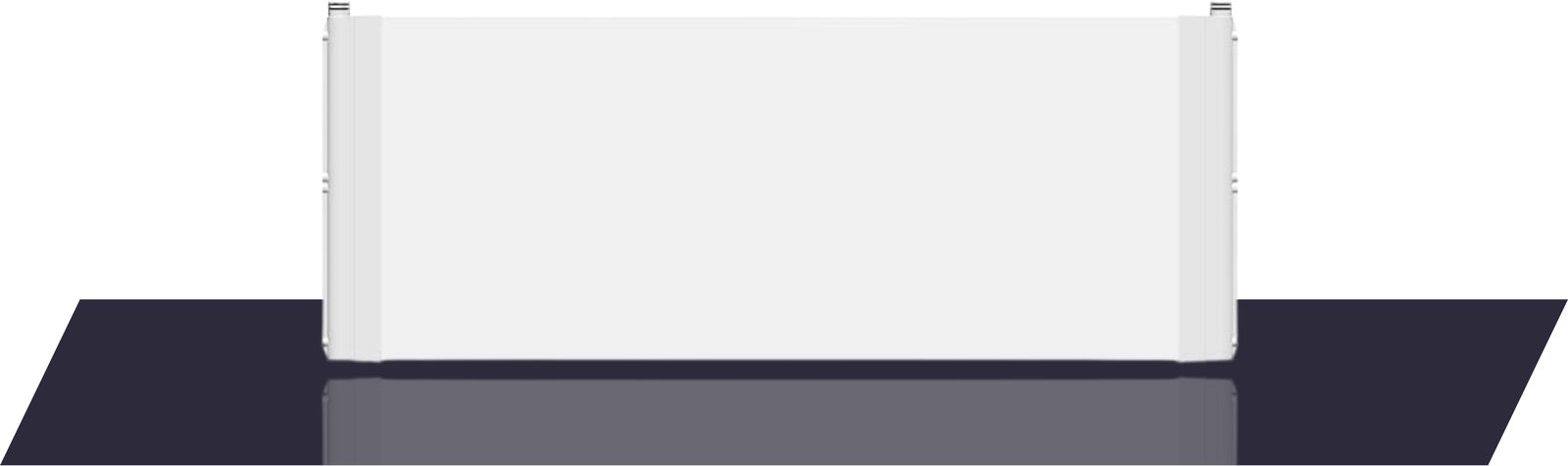
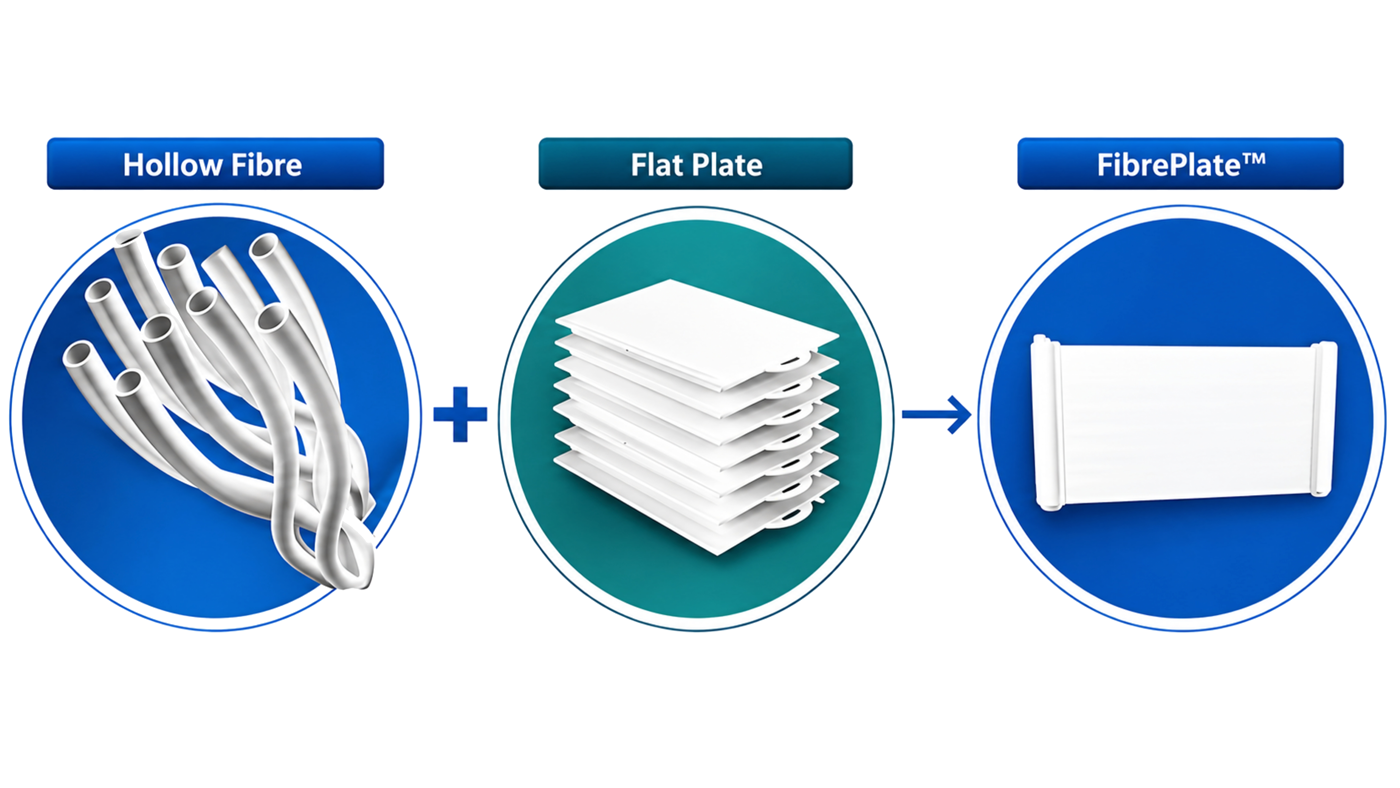
FibrePlate™ Fusion removes these failure modes through a hybrid horizontal architecture that combines open hydraulics with high surface area density. This configuration prevents dead-zone formation, maintains uniform scouring, and stabilizes permeability under variable flows and solids loading.
The horizontally mounted membrane orientation creates direct hydraulic pathways through each cassette, reducing pressure gradients and mechanical stress. This architecture maintains stable transmembrane pressure (TMP) over extended operating periods, controlling fouling intensity and aeration demand rather than compensating for their escalation.
Core Technology Characteristics
- Horizontally mounted immersed PVDF ultrafiltration membrane
- True ultrafiltration with 0.04 μm pore size
- 16 triple-reinforced flexible membrane sheets per module
- 500 ft² active filtration area per module
Strategic Outcome
FibrePlate™ Fusion establishes the reference architecture for modern immersed MBR systems by prioritizing lifecycle stability over short-term efficiency metrics and removing the structural risks that undermine long-term performance.