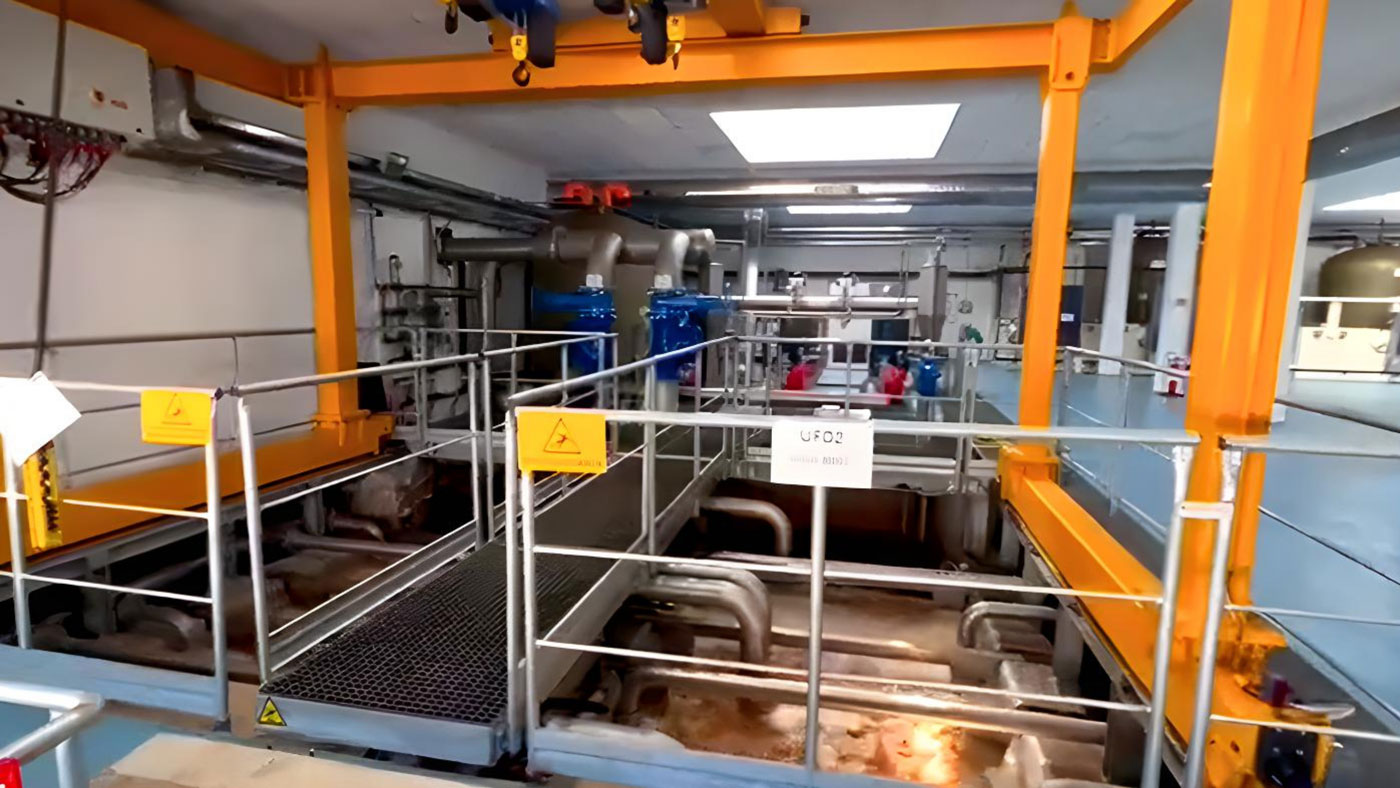
Full-Scale Results from Operating Facilities
Performance validation for FibrePlate™ Fusion membrane technology is established through sustained operation in full-scale municipal and industrial wastewater treatment facilities, not short-term pilots or controlled demonstrations. These systems operate under continuous hydraulic variability, debris exposure, and long service intervals where legacy MBR architectures typically exhibit TMP drift and escalating intervention.
Across operating installations, operators have consistently reported outcomes directly tied to lifecycle risk control:
- Increased treatment throughput within fixed hydraulic constraints
- Stable permeate quality under variable loading
- Predictable long-term transmembrane pressure (TMP) behavior
- Controlled energy intensity over extended operation
In one municipal installation, operators reported that after nearly two years of continuous operation, FibrePlate™ Fusion membrane performance remained sufficiently stable to justify a second project commitment. This decision reflects confidence in controlled lifecycle behavior rather than short-term performance gains.
In another facility, operators observed the ability to process approximately three times the flow in half the footprint compared to legacy membrane configurations, demonstrating architectural correction of hydraulic and fouling constraints rather than incremental optimization.
These results validate FibrePlate™ Fusion’s hybrid membrane architecture, which balances hydraulic openness with high membrane packing density to prevent fouling acceleration and maintain TMP stability over time. This design directly addresses failure modes that emerge under variable loading and long-term operation, reinforcing a clear position: lifecycle predictability outweighs short-term efficiency metrics.
Collectively, this performance data confirms FibrePlate™ Fusion as an infrastructure-grade, field-validated MBR reference architecture engineered to maintain controlled operation across multi-decade asset lifecycles, where performance stability is the requirement, not the differentiator.